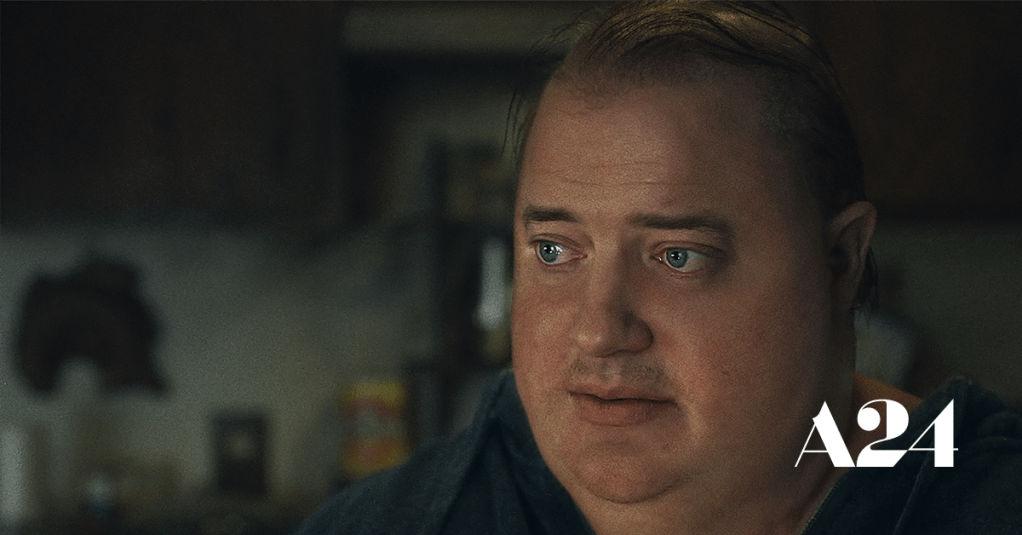
The Whale is a psychological drama, directed by Darren Aronofsky, based off Samuel D. Hunter’s play of the same name. Brendan Fraser stars as Charlie: an online English professor who has retreated to a life of reclusion, locking himself within the confines of his apartment due to his morbid obesity. Tackling a range of modern morale conundrums (including society’s perception towards obesity, dysfunctional familial relationships, and homophobia within religion to name a few…) The Whale is deeply complex yet never contrived. Aronofsky remains rooted in the humanity of Charlie, rather than the spectacle of his physical form. Aronofsky fights for Charlie.
The controversy surrounding The Whale was only to be anticipated. Obesity and body image are themes that should only be treated with compassion and delicacy, and many have argued that Aronofsky failed to do this. Many have criticized The Whale of fat-shamming and being a “cautionary tale” rather than a sympathetic one. Which, even as a lover of this film, I cannot completely disregard. With graphic, prolonged scenes of Charlie attempting to arise from his sofa (from which he spends the majority of the film), I can see why some argue Aronofsky presented a Charlie that is grotesque, rather than one that ignites empathy. Charlie drips with sweat as he hoists himself onto his walking frame occasionally belching out absurd, animalistic noises- this definitely makes for an uncomfortable viewing. However, Brendan Fraser’s performance is packed with such a nuance and tenderness, this scene broke my heart. I was not repulsed nor disgusted, only devastated.
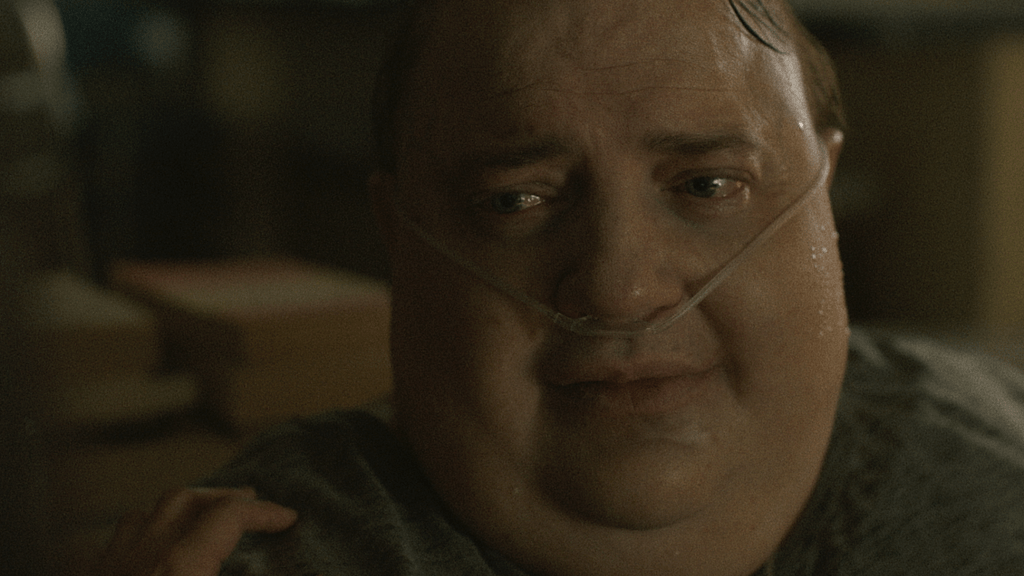
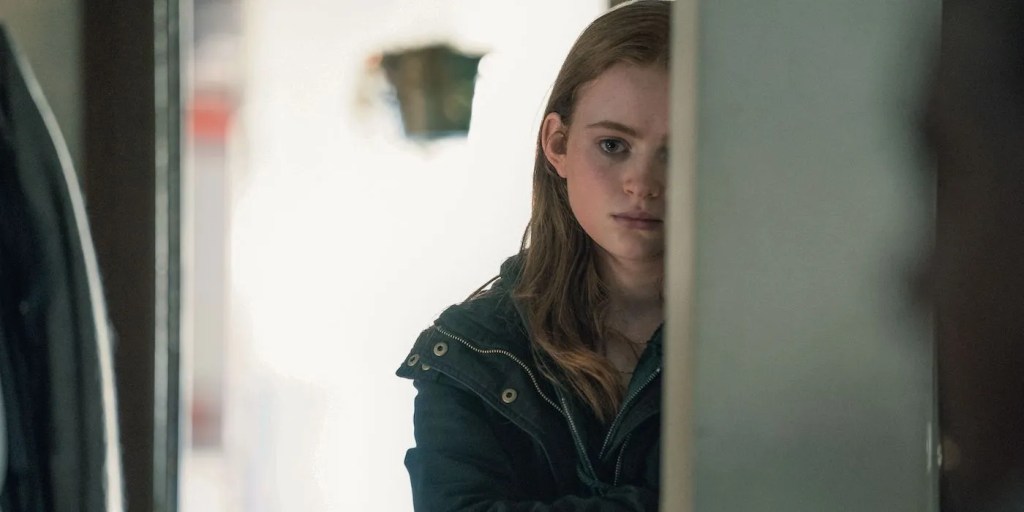
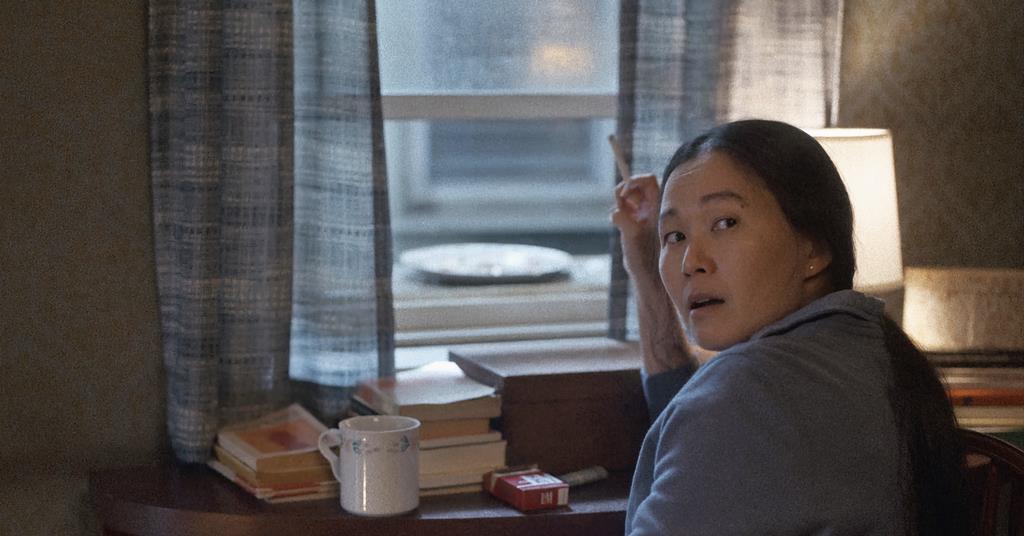
Aronofsky is a director who knows how to provoke life. As previously mentioned, Fraser is astounding and it’s unsurprised the Academy have acknowledged his work with a nomination in the Best Actor category. Likewise with Hong Chau’s nomination in the Best Supporting Actress category, her performance as Liz (Charlies’ caregiver and only friend) is admirably honest. Stranger Things’ Sadie Sink offers a rooted humanity and complexity to the “angsty teenager” type and watching her attempt to rebuild a relationship with her absent, shell of a father, is agonisingly tragic.
However, for me, Samantha Morton’s short yet impactful performance as Mary (Charlie’s ex-wife) is what really stayed with me post-credits. Mary is a beaten yet resilient woman. Her actions have never been perfect but she is human. Morton fights for her. Mary is played with a generosity and consideration that is hard to villainize. Humanity is neither good nor bad. Ultimately, we are all just a product of our experiences and our environment: we are as equally flawed as we are noble. Morton captures the ambiguity of the human spirit impeccably.
Fundamentally, The Whale is a social tragedy. Aronofsky needs the audience to look at themselves, and the limits of their compassion, objectively. Brassaï said, “The purpose of art is to raise people to a higher level of awareness than they would otherwise attain on their own.” Aronofsky asks why people like Charlie have been marginalised by society… why is our habitual response to judge rather than to understand? Aronofsky gives a voice to the voiceless. To ask these questions, it’s essential the audience leave their ego at the door and empathize without inhibition.
Charlie has lived a life of grief and sadness. He has been abandoned by all those around him and punished his whole life for who he is. The suicide of his lover Alan, the son of a pastor, abandoned by his family and the church because of his sexuality, caused a grief-stricken Charlie to binge-eat himself towards death. Yet, his optimism and ability to find joy in humankind is unwavering. He is intelligent: motivated by progression and new ideals which he preaches to his online English class (even if he won’t turn the camera on). He is dry, witty, and tries desparatley to understand his damaged daughter, Ellie, when no one else cares to.
Even when the world around him tells him not to… Charlie loves without hindrance. “People are amazing” is what a distraught Charlie declares, forcing a smile through his sobs. I don’t think there was a dry eye in the house.
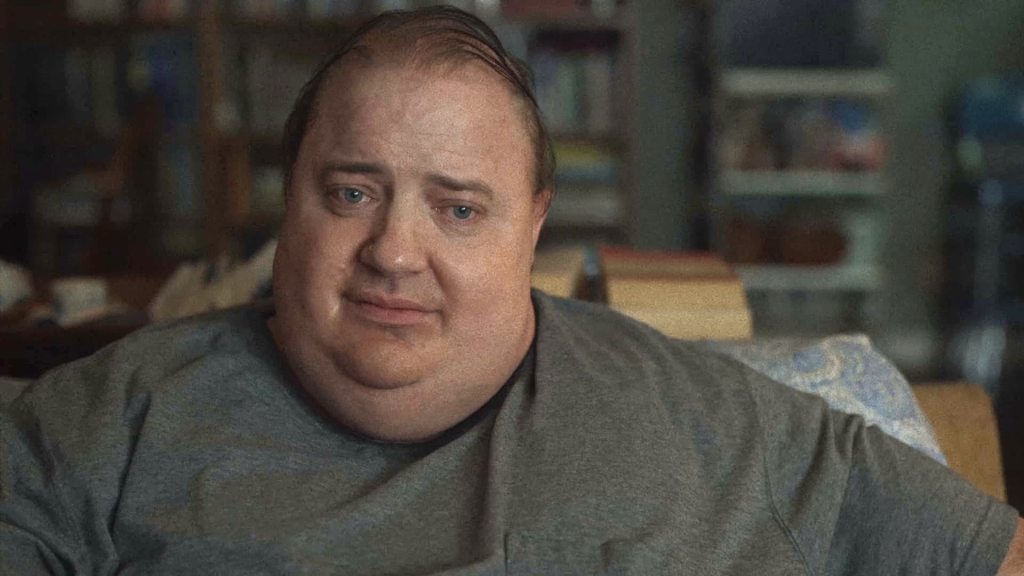
The Whale reminds us of how trauma can manifest itself physically. Our bodies are simply vessels to our inner life. Charlie’s physicality is a symptom of all he’s endured and persevered. The Whale isn’t a story about a fat guy who can’t stop eating. It’s a story about endurance, bereavement, betrayal, and hope.
I watched this film in the cinema, and when it finished no one moved from their seat. Something lingered in the air. The room was packed with broken hearts.
I’ve thought about Charlie a lot this week. I realised that the overwhelming sense of grief I felt when the credits rolled, was the way Charlie has felt his entire life.
I just watched a man die of a broken heart.
Lucy Speer
16th of February 2023
 There Will be Spoilers
One response to “The Whale (dir. Darren Aronofsky, 2022)”
Brilliant
LikeLike