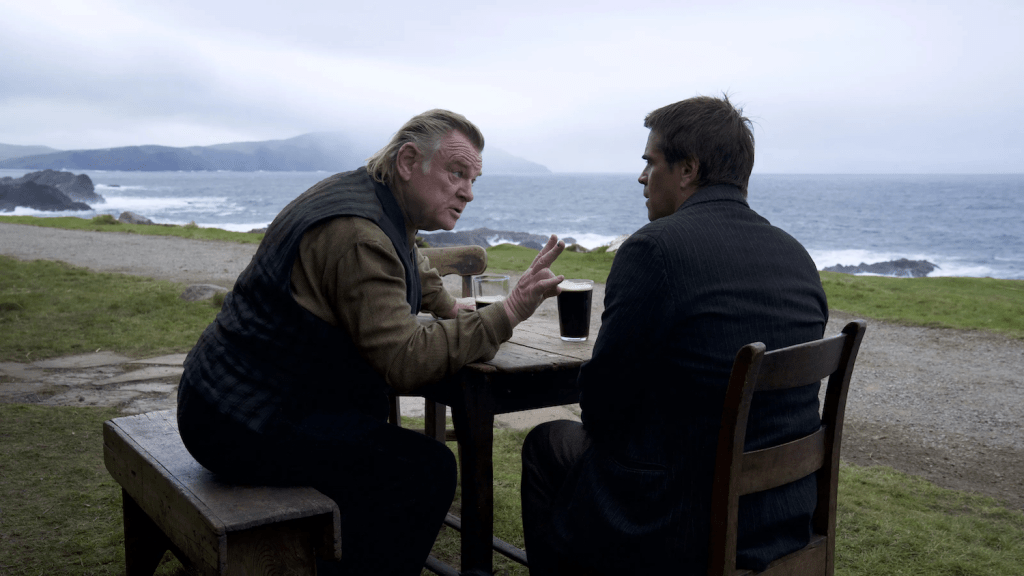
As we approach the 95th Academy Awards, Martin McDonagh looks towards nine possible recognitions. His tragic tale of loneliness and mortality in “The Banshees of Inisherin” reunites Colin Farrell and Brendan Gleeson, after McDonagh’s 2008 acclaim “In Bruges”.
Pádraic (Farrell) and Colm (Gleeson) are best friends. That is until one day, when Pádraic calls for Colm to go for their daily pint and Colm doesn’t answer… Colm has decided he no longer wants to be friends with Pádraic. He just doesn’t like him anymore.
McDonagh is bleak in his depiction of ‘small-town’ fever; discouraged in his examination of the futility of war… and hilarious in his sharply dark (can we laugh at this?) Irish wit. Set in 1923, on the fictional isle of Inisherin, Colm and Pádraic’s feud is microcosmic of the Irish Civil War heard in the distance. “Good luck to you, whatever you’re fighting about” is reminiscent of Colm’s (seemingly) simple reason for declaring war on Pádraic. Sounds of the War, echoing over the landscape, only add to the overwhelming sense of despondency the Isle inhabits. This is a place abundant in antagonism, and bare in opportunity. However, I don’t think it’s necessary to become bogged down with the wider metaphor when watching the film. McDonagh’s genius remains in the humanity- he’s just neat in his sociopolitical scorn.
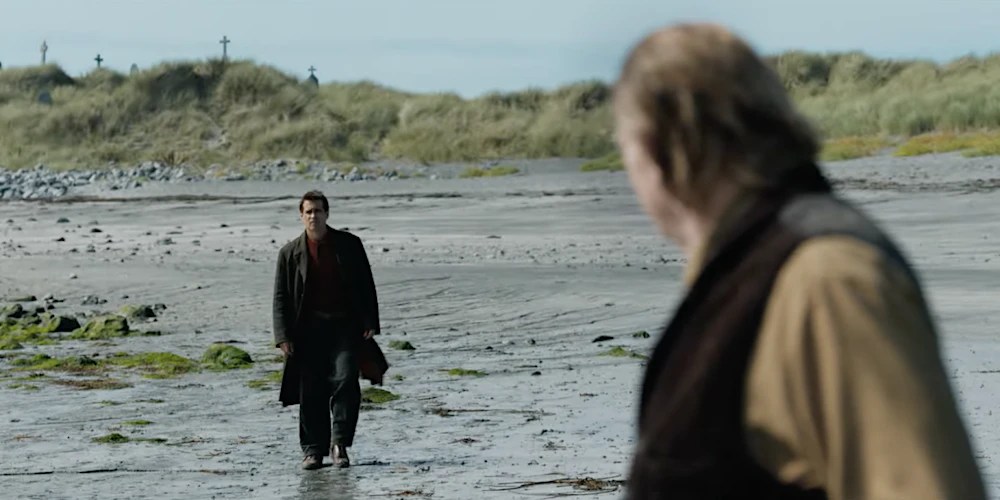
Colm’s decision-making can, at first, seem bizarre. Yet, McDonagh has carefully constructed a protagonist that is honest: Colm is simply a troubled man the audience cannot help but empathize with. When Colm decides to severe his friendship (and his fingers!) with Pádraic, we can never choose a side, as if ones the ‘goodie’ and ones the ‘badie’, we can only watch on in devastation. Yes… Colm absolutely does go to the extreme- amputating all five of your fingers just to prove a point, is a lot! However, it quickly becomes apparent that this is much more than Pádraic being “too dull” for Colm, it’s bigger than that. It’s mortality and it’s time.
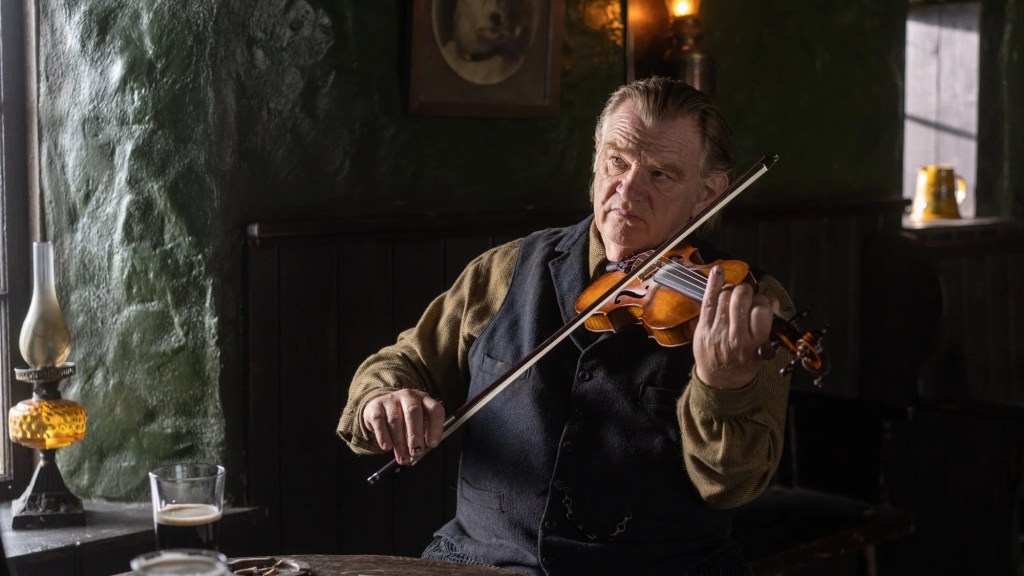
McDonagh is clever. He masks huge, metaphysical concepts of temporality and remembrance with a feud between two friends. Its arguable that Colm, though alive, is making his journey to the afterlife as he becomes obsessed with death and how he will be remembered. What has he done that’s significant? And, if there’s nothing… what has been the point in all this? “I just have this tremendous sense of time slipping from me, Pádraic” is the reasoning behind Colm’s rejection. Instead of “aimless chatting” Colm decides it’s time to dedicate his existence to music as he desperately searches for a legacy. Having spent his entire life burdened by the senselessness of a small island, Colm would rather amputate the only things he needs to play his fiddle than die with the knowledge that his life has meant nothing. If we examine Colm in terms of Aristotle’s tragic hero, his hamartia is his existentialism, and his obsession to find meaning.
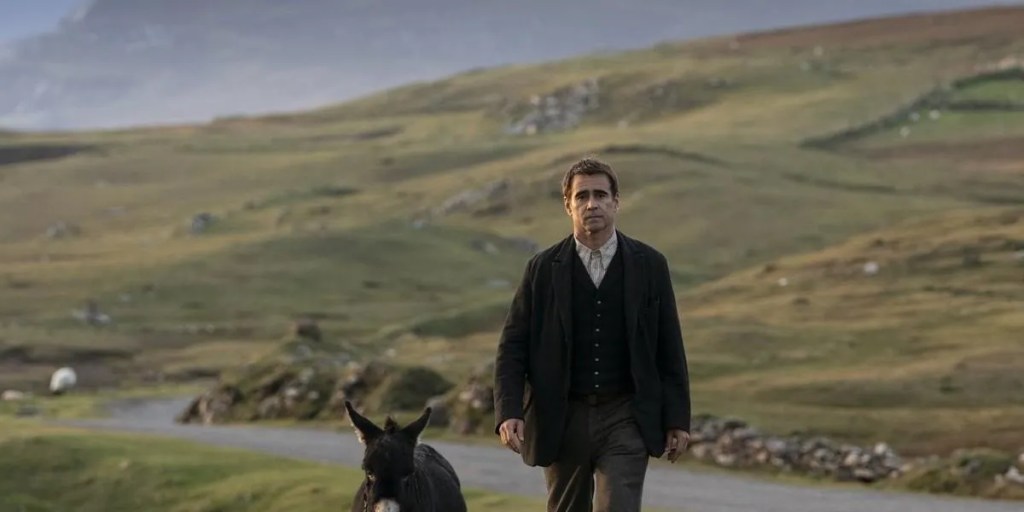
Pádraic is the perfect foil to Colm. He’s a simple man, who’s greatest concern is whether his sister Siobhán (Kerry Condon) will allow his donkey Jenny in the house or not. He lacks any ambition or desire, but his child-like naivety is only something that ignites sympathy in the audience. Farrell is marvellous. He makes a character that is only ever described as “dull” and “limitless” by those around him, into one of the most compelling and sympathetic leads cinema has seen. The absolute despair in his tone as he rebukes Colm, “You used to be nice!”, must one of the most tragic pieces of script work I’ve heard in a while. Pádraic’s entire world collapses around him.
McDonagh lays an excellent foundation for Pádraic’s inevitable reversal of fate. As soon as Colm makes Pádraic face the consequences for his constant pestering (by leaving one of his severed fingers on his doorstep), The Banshees of Inisherin becomes a story of transformation. Pádraic transforms: his innocence turns into corruption, and his heartache becomes brutality.
To write a review on The Banshees of Inisherin and ignore Barry Keoghan’s performance would be a huge injustice. A week ago, Keoghan collected the BAFTA for the Best Supporting Actor in the role of Dominic (the challenged son of the Island’s Policeman), and I’m hopeful the Academy will continue this recognition next month. Keoghan and Farrell worked together back in 2017 on “The Killing of a Sacred Deer,” where Keoghan’s performance as Martin isn’t unalike from his as Dominic. Both Martin and Dominic are twitchy, constantly agitated: Keoghan twitches and nods with a nervousness that is lived-in rather than caricature.
Dominic is just as hilarious as he is heart-breaking. McDonagh gifts Dominic some of his wittiest dialogue in the picture, he is often vulgar and impolite, making no secret of his sexual attraction towards Siobhán. However, it’s clear his brashness is only a mask for his vulnerability. Dominic is lonely, he’s been taken advantage of many times, and the knowledge of this only makes McDonagh’s dénouement a difficult watch.
Arguably, Dominic’s fatal end lies in the hands of Pádraic. Pádraic’s dismissal of Dominic, to pursue revenge on Colm, is an exact replication of the original hand Colm deals to Pádraic. Only difference being, Dominic has nothing to avenge, Pádraic has his donkey. Dominic is the true tragedy of The Banshees of Inisherin.

Additionally, Kerry Condon’s performance is exemplary. It’s a relief to see McDonagh write a character that has the intelligence and the initiative to escape this bleak island. She brings a femininity that is empowered and aware (in such a repressed setting), and this is refreshing to watch.
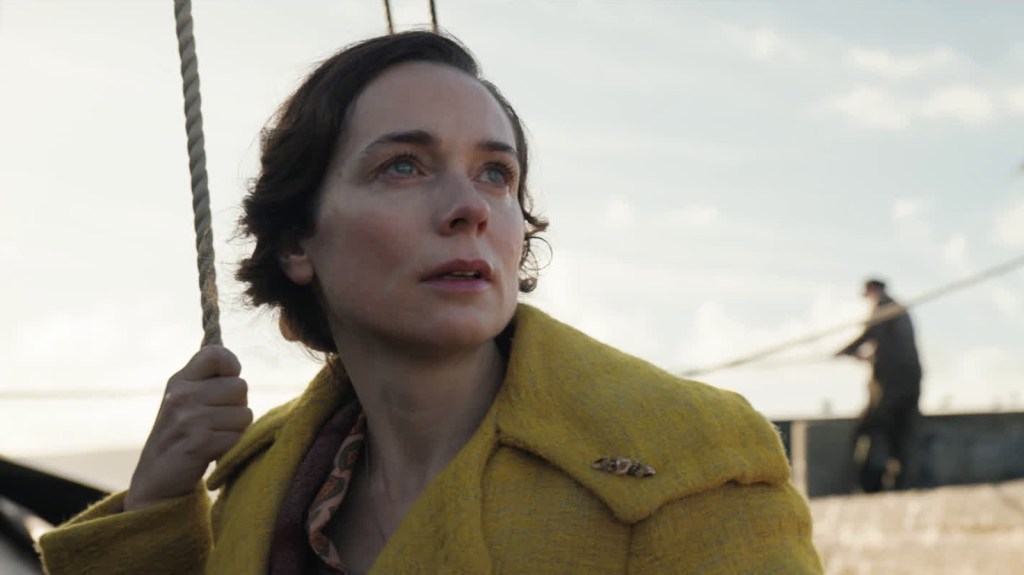
The Banshees of Inisherin is a fable of melancholy and macabre. The perfect tragicomedy. Martin McDonagh doing what he does best: making you laugh out loud with one line, and then ripping out your heart with the next.
Lucy Speer
27th of February 2023
 There Will be Spoilers
One response to “The Banshees of Inisherin (dir. Martin McDonagh, 2022)”
Excellent review
LikeLike