
The 2022 Palme d’Or winner Triangle of Sadness is a satirical drama directed by Swedish filmmaker Reuben Östlund. Triangle of Sadness follows a Three- act structure, connected by Supermodel couple, Yaya (Charlbi Dean) and Carl (Harris Dickinson), navigating the superficialities of an online career and gender roles in a progressive, Gen Z society. Östlund writes with a definite socio-political scorn; an undoubtable bitterness at the state of the nation, evident in his two most recent feature films Force Majeure (2014) and The Square (2017), however, there is something in Triangle of Sadness’ visual vulgarity that packs a hard punch in his English-language film debut.
Many have criticized Östlund’s lack of refinery and ludicrousness. And… I get it! It’s undoubtable that Östlund states his case in an obvious, bawdy way, arguing with a straightforwardness that is impossible to miss. His satire isn’t necessarily clever or formulated with same wit he used in The Square… however, for me, that’s the point! Östlund testifies without pretension or any artsy calculation, partially because that is exactly what he is criticizing. He is graphic, scorning, and unapologetic. Without a doubt, the only way to evoke revolution is to go through a period of uncomfortableness… when you bare this in mind, Östlund’s grotesqueness is absolutely justified.
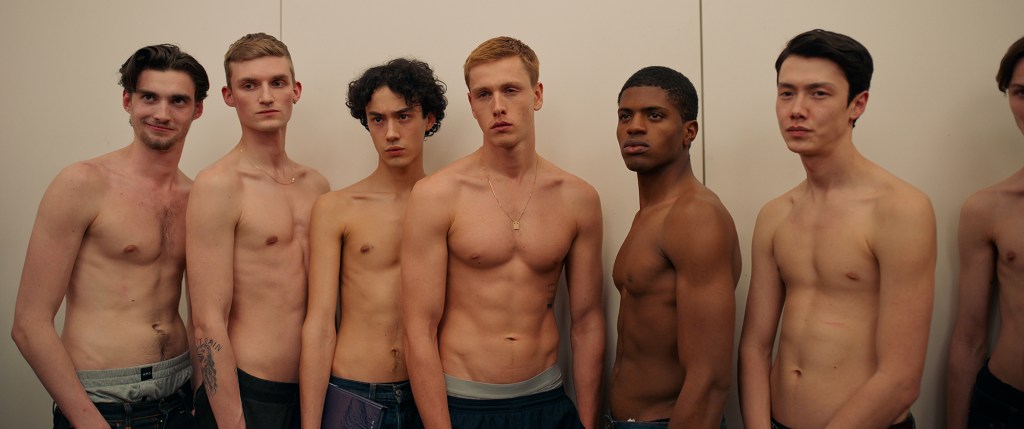
Act 1 is my favourite. A short film in itself- we meet Supermodels, Carl and Yaya, as they debate the gender politics of the Millennium while the bill for their swanky dinner sits between them. The bill has been on the table for too long to suggest Yaya has any intention of paying and Carl resents her for this. Bitter at the fact he is expected to pay, even though she earns more than him (which she makes sure to remind him). Sparks fly as they attempt to keep their domestic under wraps, hidden away from the swanky superficialities of such a high society environment. Their domestic becomes less so about the bill, and more about the basis of their relationship: a vapid vision of wealth and, consequently, power. Money is clearly inconsequential to Yaya- she tosses notes at Carl, mocking him out of bitterness for not succumbing to her expectations- Yaya is representative of a new-age of ‘Influencer’ wealth: tone-deaf, nonsensical, and regressive.
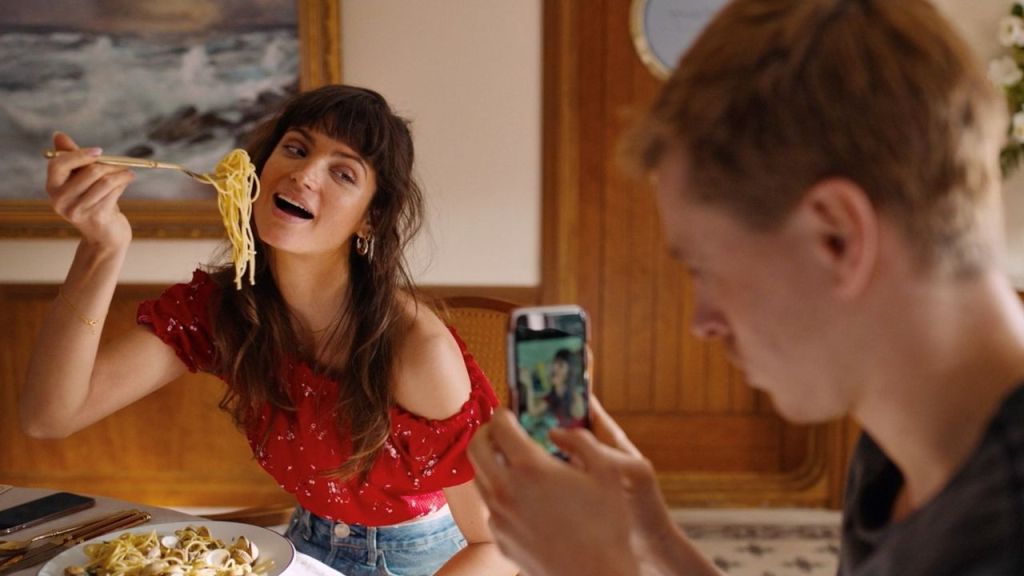
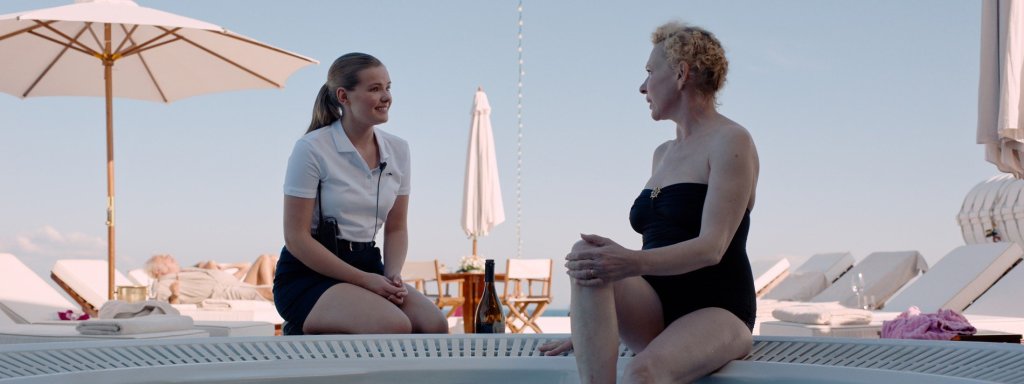
Act 2 takes on a Monty Python-esque farce. Yaya and Carl board a Yacht, a trip they have been gifted to promote on social media, where they join a collection of out-of-touch, wealthy aristocrats on a luxury cruise ride from hell. Influencers Carl and Yaya pose next to pasta (not to be eaten, but to be posted on Instagram), and across from them sits Russian oligarch, Dimitry (Zlatko Buric) who made his fortune as the self-proclaimed “king of shit”. Östlund makes an interesting comparison between the social responsibility of Old Money vs. New Money and concludes that both are as just as trivial, and removed from the “one body,” as each other. We are introduced to a crucial dynamic, soon to reach its satisfaction in Act 3, being the “upstairs” vs. “downstairs” separation: those who are one of us, and those who work for us. Östlund pokes at the ignorance of the rich, Dimitry’s wife Vera (Sunnyi Melles), demands the crew “reverse roles” with her, she finds pleasure in the absurdity- the ridiculousness of the workers swapping places with her in the hot tub is simply entertainment. The rich can toy with class roles because, for them, there is nothing at stake.
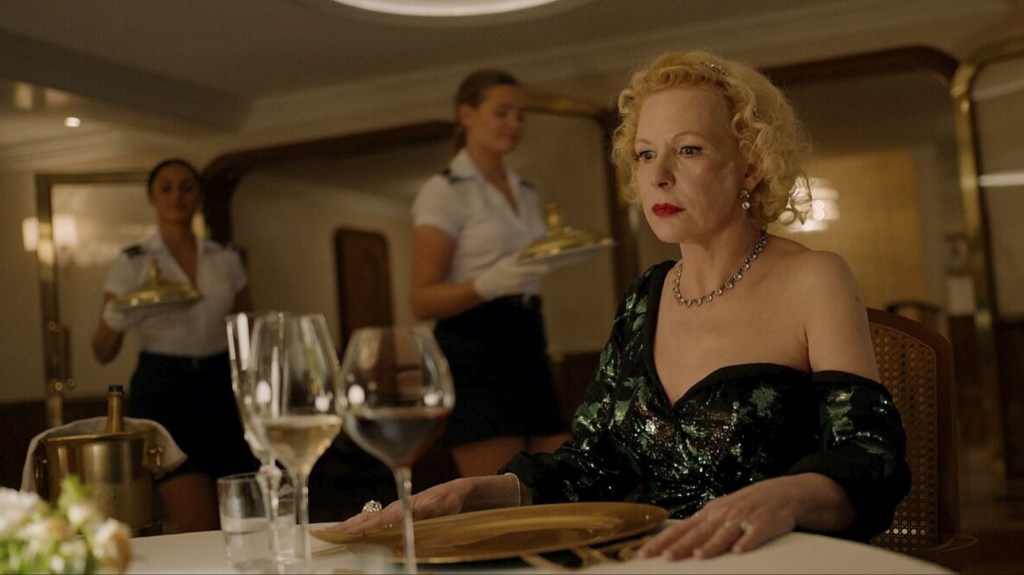
After 90 minutes of irritation, Östlund finally offers his revenge. The boat hits a storm, and what was meant to be a fashionable, 5-course dinner turns into absurd, takedown of the social hierarchy in the form of panic and bodily-fluids. Hilarious and nauseating. The guests are humiliated and degraded with everything but discretion… It’s a spectacle to say the least. The saga is commentated by Dimitry and the Captain (Woody Harrelson), as they debate Communism and Capitalism, ironically, in the form of quotations. The entire showdown is one big slapstick: not necessarily clever, and just as crude as it should be. I know Östlund had a laugh filming these scenes.
Act 3 leaves us with our moral conundrum. In the most bizarre turn of events, the boat ends up shipwrecked and the toilet-cleaner, Abigail (superbly played by Dolly de Leon), is appointed the matriarch, as she is the only one with any survival skills. Abigail calls all the shots on this Lord of the Flies Island: deciding who eats and when, capsizing the bizarre gender bias’ formed between Yaya and Carl and ultimately deciding who she wants to live, and who she wants to die.
Abigail grows to be just as power-hungry and exploitative as the boating Aristocrats. So… what is Östlund trying to say here? Ultimately, are we all just as bad as each other? Can the world exist without some form of social hierarchy? Östlund makes it very clear that we cannot go on the like this, the rich getting richer and the poor getting poorer, but is this, supposedly idealistic, upheaval much better?

Essentially, we are here to examine the human condition. Power corrupts those who have it and Triangle of Sadness searches for the appropriate response to this… but after nearly three hours of searching, it doesn’t find it.
Lucy Speer
1st of May 2023
 There Will be Spoilers