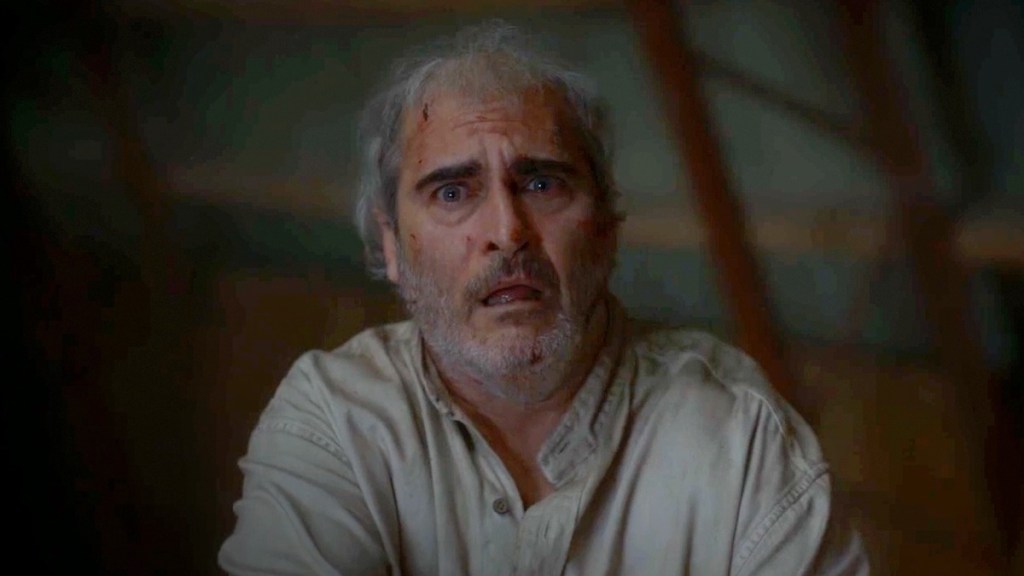
Beau is Afraid is a Surrealist Tragicomedy, directed by Ari Aster. Starring Joaquin Phoenix, Aster’s third feature film has been highly anticipated after the success of Hereditary (2018) and Midsommar (2019). Without a doubt, Aster has developed an idiosyncratic cinematic style that is far from the derivative Horror Hollywood churns out these days. His films are trendy and, with the rise of edgy production studios like A24, and success of semi-surrealist directors like Charlie Kaufman, Aster’s ‘Arthouse Horror’ pays homage to the Cinema Hipsters of the 21st century. Despite being his most maverick film to date, Beau is Afraid still has the Aster essence: humiliating horror, disturbing farce, and insanity, at its finest.
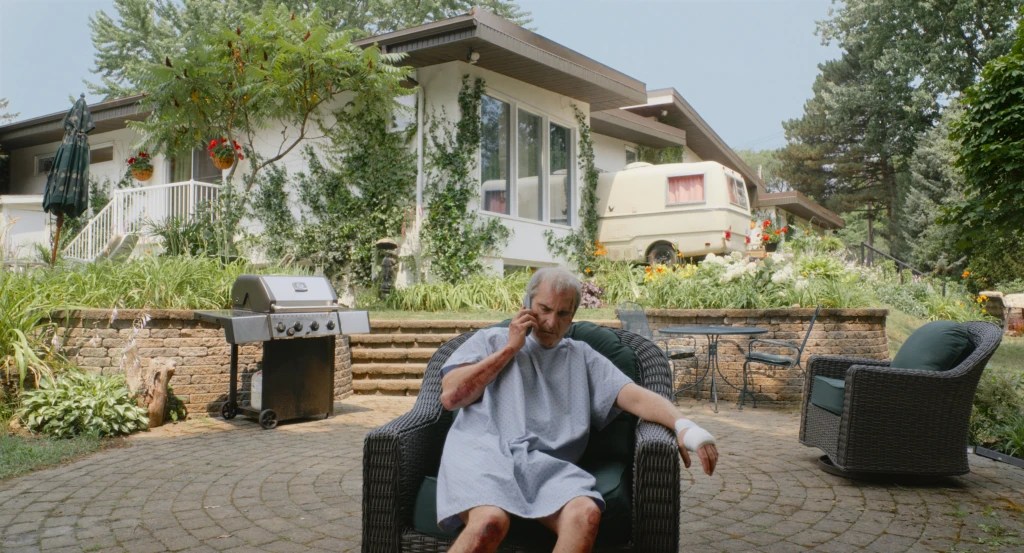
With a $35 million backing from A24 (they’re most expensive film to date!), Beau is Afraid is a visual spectacle. A three-hour long Oedipal Odyssey: Beau has to return home to see his mother, but the bizarre world he lives in begs to differ. The journey is wild: often disturbing and always unpredictable. I was particularly excited by the absurdist world Aster manufactures: a world where corpses are casually abandoned on the streets, demoniac graffiti covers the walls, and a naked serial killer (known as “Birthday Boy Stab Man”) is on the loose. The dystopia is not only indicative of Beau’s anxious mind, but also a provoking comment on the State of the Nation, highlighting just how disturbing the 21st century nonchalance to tragedy is. Thankfully, Aster finds some order in the chaos: dividing his story into an episodic structure means the wacky narrative is much easier to stomach. It is tedious at times (3 hours of “so traumatic its funny” was always going to require patience) however, Lucian Johnston’s razor edit spurs the tale forward.
Aster has faced criticism for his avant-garde take on Psychological Horror. Many have argued it lacks substance, favouring stylistic choices over a functional narrative, to make boho, trendy cinema. The high level of stylisation pays homage to early Surrealism, Act 1 echoes Lynch’s Eraserhead (1977) however, I’d argue Beau is Afraid remains narrative driven, grounded in the dysfunctional relationship between Beau and his mother.
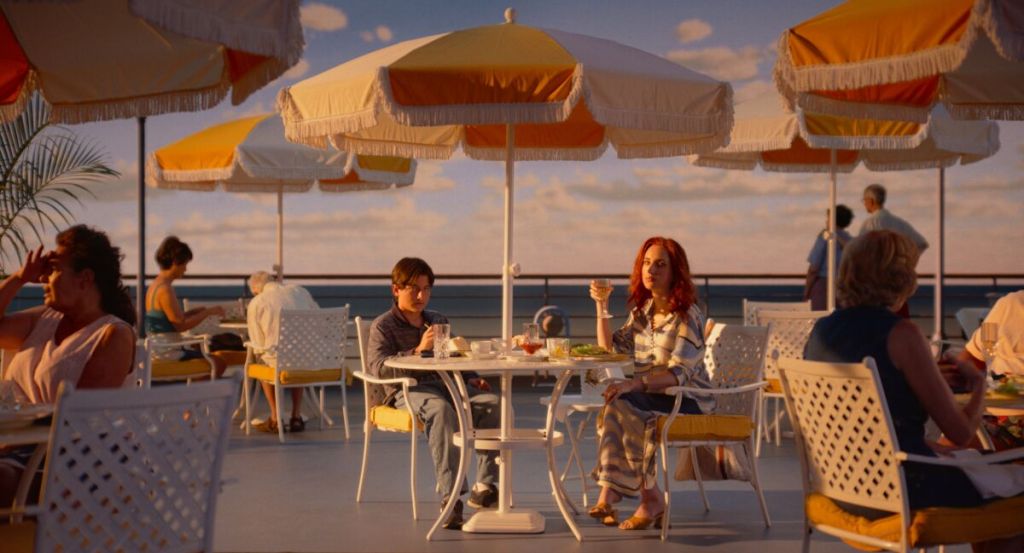
The Oedipal Complex is something cinema has explored for centuries. Aster’s take is nothing new, with clear echoes to Kubrick’s infamous Eyes Wide Shut (1999), and more classically, to Shakespeare’s Gertrude and Hamlet. Within the first 10 minutes, Beau is asked the crucial question which proves to be the subconscious quest he ensues- “Do you wish your mother was dead?”. Obviously, he declares that he doesn’t… but this is the moment his fate is reversed. We are immediately thrown into the climax of the tragic hero tale, and it’s arguable that the remaining 2 hours 50 minutes is Aster’s extended denouement- an exploration of the unfair consequences Beau must face.
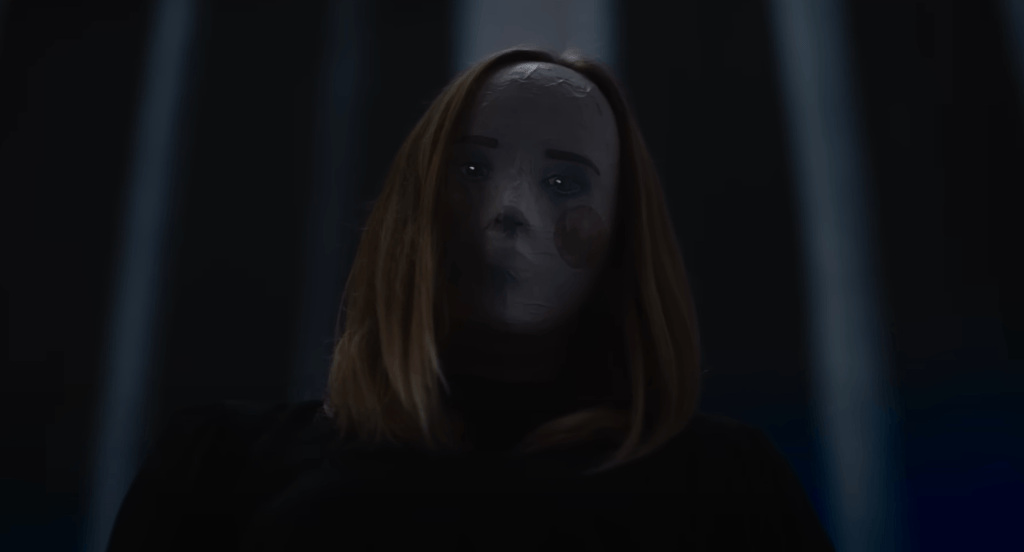
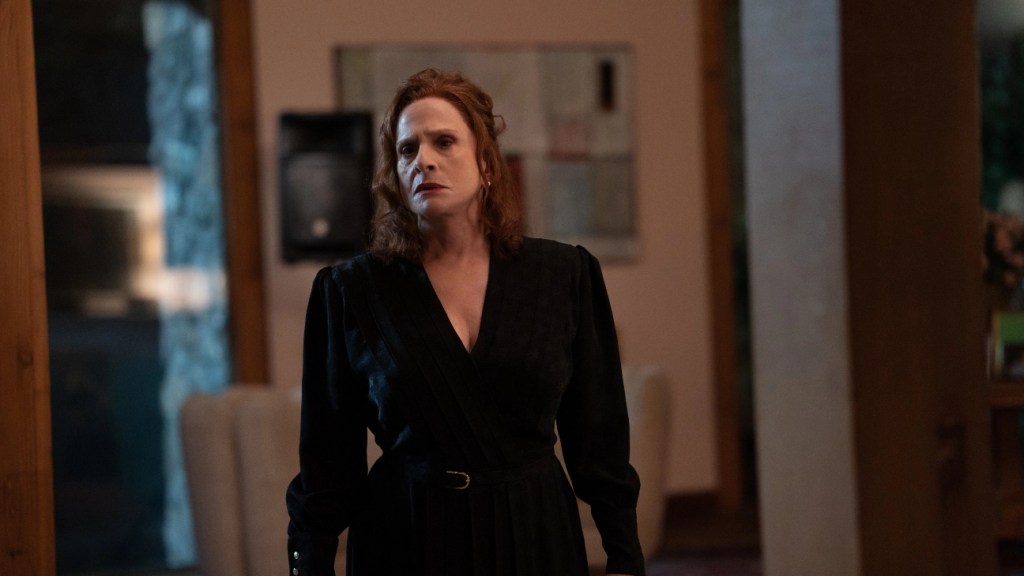
Fate and free-will (or lack of) play a major part in the universe Beau inhabits. Despite being a story of catastrophe, the tragedy inevitably becomes hilarious because the characters are simply victims to the world they inhabit, their choices are meaningless and this is farcical to watch. A middle-aged man, pumped full of medication prescribed by his therapist, with an infantile psyche that means he can barely string a sentence together, it’s clear that this story won’t end well for Beau. Phoenix’s expression of confused pain and zonked anxiety can be self-indulgent at times, but Beau is the least complex of Aster’s protagonists, so this is unsurprising. When disaster strikes, we see the same reaction from Beau- he remains confused and defeated, cartoonish at best. This isn’t to say Phoenix’s performance isn’t exciting, in a non-naturalistic setting his choice must be other worldly, and his perplexed expression is revealing of the under-developed child he truly is. It’s only in the final Act, Phoenix gifts us with a ferocious performance and complexity of character. When Beau eventually encounters his mother (exquisitely played by Patti LuPone), he becomes equally as dangerous to her as he desires her love. The air between them is loaded and, as the space encloses, it becomes unclear as to whether they will embrace or brawl.
Besides the final showdown, Beau’s animated dream was a standout in the picture. For a nightmare to be truly impactful, we need some relief. Titled “Hero Beau”, Aster’s 12-minute long, stop-motion series (in the form of a hallucination) depicts the life Beau could have had if he had been free from his overbearing mother. Cristóbal León and Joaquín Cociña’s animation is impressively aligned with the aesthetic of the film and, with the gift animation offers, the sequence is textured and deviceful.
Aptly titled, Beau has a lot to be afraid of. Put on trial for his life, drowned in the circumstance of his upbringing, our reaction to his Kafkaesque humiliation is weirdly not sympathetic…but shameful. Are we as moral as we would like to be?
Aster examines Freudian psychosexuality with a wink and a nudge. Dangerous, farcical, and offbeat. Aster’s “nightmare comedy” is his funniest film to date.
 There Will be Spoilers