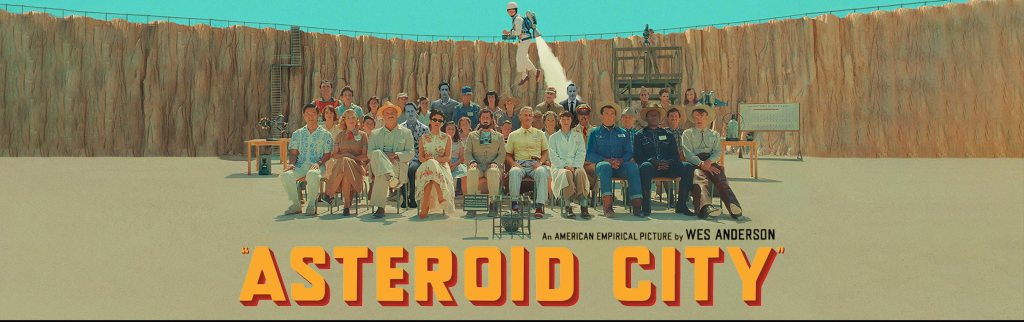
Last month saw the release of Wes Anderson’s latest feature film, ‘Asteroid City’. Over the years, Anderson has developed himself quite the cult following and, with success of ‘The French Dispatch’ (2021), Asteroid City was, without a doubt, one of the most anticipated films of 2023. Despite not being a huge Wes Anderson fan myself, I’ve been told that Asteroid City is “Wes Anderson’s film for Wes Anderson fans”, as if Anderson made the decision to solidify his idiosyncratic, cinematic style.
You don’t need to be a Wes Anderson superfan to spot one of his films from the rest: the symmetrical shots, extravagant colour palettes and quirky characterisation. Anderson’s style has become so notorious that the ‘Wes Anderson challenge’ (where Tik Tok users film their lives in the style of Anderson) has trended for some time now, and Asteroid City itself is a masterclass in all Anderson does best.
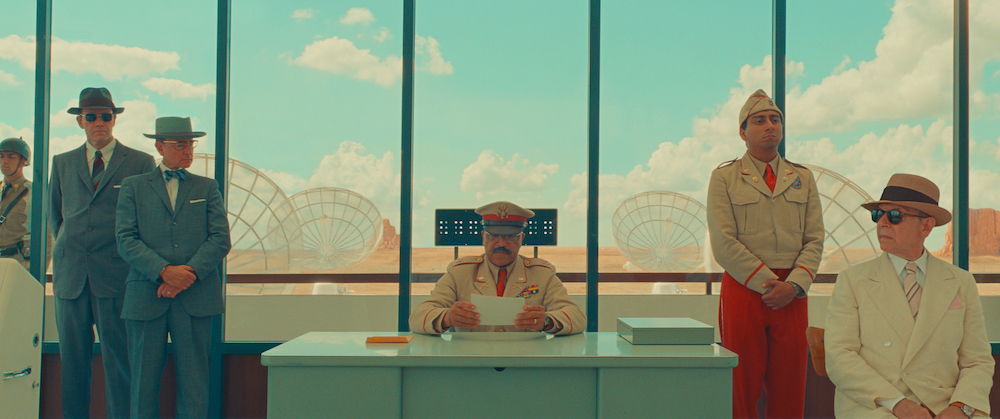
Asteroid City hosts Anderson’s biggest cast yet. With the likes of Scarlett Johansson, Tom Hanks, and Edward Norton (to name just a few), Anderson did not scrimp on the Hollywood A-listers. However, with a huge cast comes a huge responsibility… and in recent years, cinema-goers have become more aware to huge Hollywood castings being used to cover up underwhelming narratives (example: ‘Don’t Look Up’ 2021). This being said, Asteroid City saw Anderson use his A-listers carefully, with a considered function and the film, overall, accommodates some excellent performances.
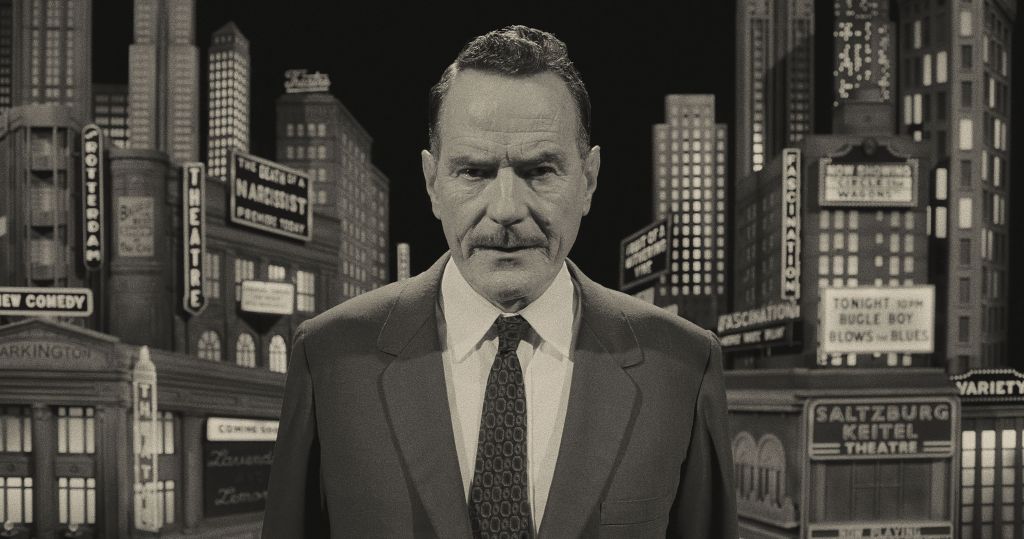
A standout to me was Bryan Cranston. ‘The Host’ of Anderson’s play within a film, within a film, meta-tale… Cranston plays an omnipotent narrator type, telling the tale of playwright Conrad Earp (Edward Norton) writing the play ‘Asteroid City’ as we see it televised before our eyes (very meta, as you’ve probably gathered). Cranston is the true anchor of this tale; without him Anderson’s avant-garde narrative would be too difficult to stomach. Cranston skilfully makes ‘The Host’ somewhat haunting, very deadpan and bizarrely unbiased.
Another standout must be Steve Carell. Carrell is exquisite in his understanding of Anderson’s humour: deadpan, dry and witty and, although only making a handful of appearances, Carrell functions as the well-needed comic relief in Anderson’s postmodern narrative.
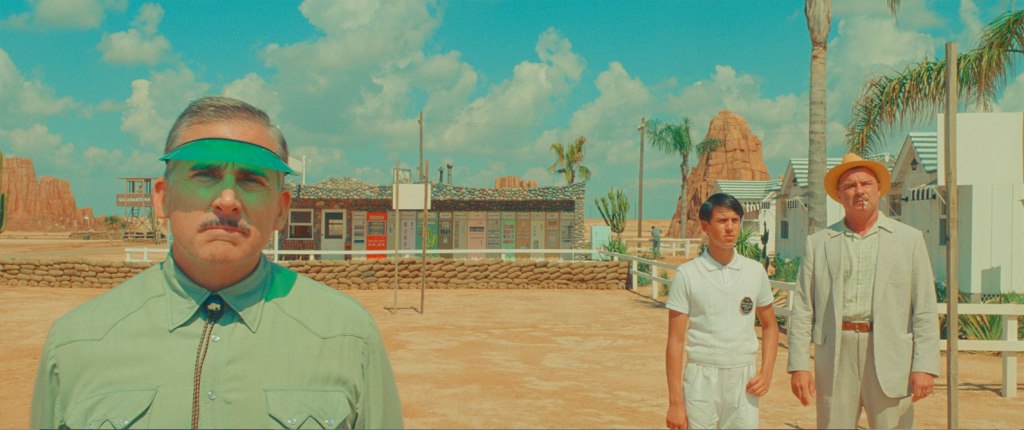
Anderson plants us in the fictional town of Asteroid City: a retro-futuristic town hosting a youth astronomy convention. When you hear it’s an Anderson film, the last thing you expect is realism… so it’s only fitting that Asteroid City is the most peculiar neighbourhood in the Southwest. Robert Yeomans’ striking cinematography only enhances this: colouring in the widescreen with saturated Kodak blues and oranges, the place looks otherworldly (huge hint to the plot here). The shots are quirky, oddly long and perfectly symmetrical (of course), our exposition shot sees the camera pan and swing revealing the inhabitants of Asteroid City: a motel, diner, car garage and, of course, the observatory (next to an insignificantly presented, huge meteor crater). The first significant moment of action is a Roadrunner bird, crossing the dirt track and this proves to be a motif that Anderson continually returns to: it could mean everything, it could mean nothing but…it’s Wes Anderson, so I guess we’ll never know.
We swiftly meet war photojournalist, Augie Steenbeck (Jason Schwartzman) and his four children arriving for the Junior Stargazing Convention which his eldest son, Woodrow (Jake Ryan), will be participating in. Woodrow is obviously a child genius and his ability to project logos onto the Moon (which has secured him his finalist place in the competition) is Anderson’s tongue-in cheek satire to America’s commercialisation. Despite being highly stylized and off-beat, Anderson never ventures into the absurd. This is ensured through his sharp, complex characterizations, and focus on dysfunctional, inter-personal relationships. This is a technique commonly used by Anderson and the reason his cinematic style has become so distinctive: despite his wacky mise en scène and unconventional narratives, he always seeks humanity and relatability in his characters. The parallel love stories between Augie and Midge Campbell (Scarlett Johansson) and Woodrow and Dinah (Grace Edwards) are soft yet complex. Woodrow and Dinah’s childlike crush on each other brims with butterflies and tenderness, posing as the perfect foil to Augie and Midge’s love, which aches with a hesitated yearn. Despite their complexities, Anderson never allows his characters to become indulgent. With his signature deadpan delivery and veer from the melodramatics we find ourselves approaching emotional strains in a tragicomedy-like way. First rule of tragedy: never allow your characters to feel sorry for themselves because, if they do it means the audience doesn’t have to. So, when Augie’s daughters find out their Mother is dead, and the most significant thing about this is that her ashes are in a Tupperware box… grief and heartache sneaks up on the audience and the scene becomes unexpectedly painful.
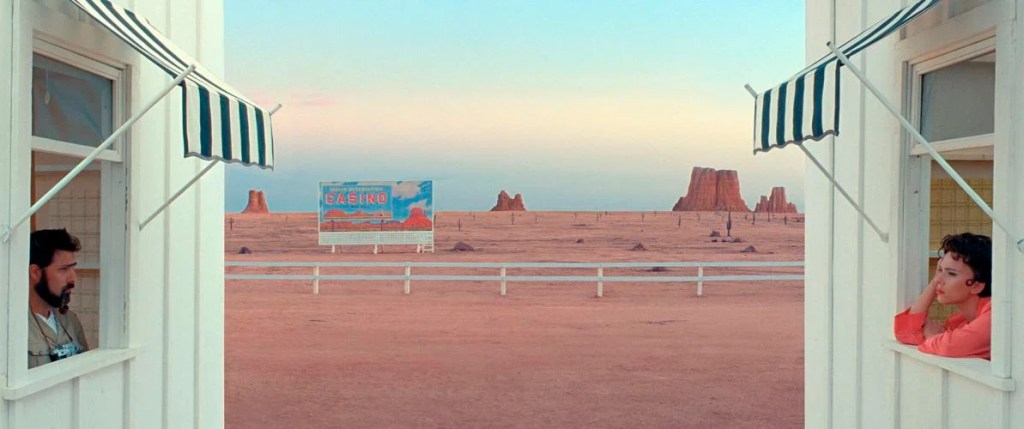
Anderson is equally as abstract as he is substantial. Yet his choices remain precise and detailed, you can leave Asteroid City having taken everything or nothing… the choice is yours. Regardless, the dazzling cinematography and excellent soundtrack definitely entertains enough for its two-hour long run time.
Anderson fan or not, Asteroid City is well worth the watch (when it eventually comes out on Disney Plus).
Lucy Speer
5th of July 2023
 There Will be Spoilers